

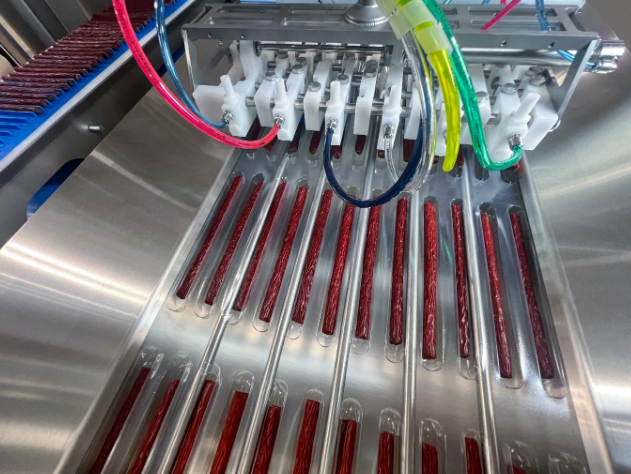
Production facilities often deal with large quantities of products that must be packed quickly and carefully before shipping. Manual packing can handle small volumes, but it usually slows down when production increases. Because of this, many manufacturers now install robotic case packers to support high-speed packaging operations.
These machines move products from conveyors and arrange them inside cases in an organized pattern. The robotic arm performs the same placement motion repeatedly with stable accuracy. This reduces handling errors that sometimes happen when workers must manually position products inside cartons during busy production shifts.
Handling Products With Precision
Packaging machines must handle items carefully to avoid damage before transportation. That is why carton loading systems are designed to place products gently inside boxes while keeping them properly aligned.
Instead of dropping items randomly into cartons, automated equipment positions each product in a controlled pattern. This approach protects fragile or lightweight items and helps maintain neat packaging layouts that improve both storage and transportation efficiency.
Supporting Continuous Production
Factories depend on a steady workflow across the entire production line. If packaging slows down, the upstream machines may also need to pause, which reduces productivity. Installing robotic case packers helps maintain consistent packing speed during long operating hours.
The robot lifts products, arranges them in the correct orientation, and places them directly into cartons or cases. Because the machine follows programmed movement instructions, the placement remains accurate even during high production demand.
Improving Packing Organization
Packaging areas must remain organized so cartons are filled properly before sealing and palletizing. Reliable carton loading equipment helps maintain uniform product arrangement inside every case.
This organized packing structure is especially useful for products that require layered placement. The machine stacks items carefully, ensuring each carton is filled according to packaging specifications while preventing wasted space inside the box.
Flexible Packaging Adjustments
Many modern production lines handle different product types throughout the year. This is one reason companies prefer robotic case packers, as they can adapt to changing packaging requirements without replacing the entire machine.
Operators usually adjust machine settings to match new product dimensions or case sizes. With simple programming changes, the robot continues packing products efficiently while maintaining the correct placement pattern inside cartons.
Reducing Manual Workload
Manual packing often requires workers to repeat the same lifting and positioning motion thousands of times during long shifts. Automated carton loading systems reduce this repetitive work and help maintain safer working conditions in packaging areas.
Workers continue supervising the machines and ensuring packaging materials remain available. However, the robotic equipment performs the heavy and repetitive product handling tasks, which helps improve overall workplace efficiency.
Conclusion
Modern manufacturing environments require reliable packaging systems that can keep up with fast production speeds. Many companies now rely on robotic case packers to maintain consistent product placement while reducing the need for manual packing work. At the same time, well-designed carton loading solutions help organize products neatly inside shipping cartons, improving both storage and transportation efficiency. By combining automation with careful packaging design, businesses can strengthen productivity and reduce operational delays. Companies looking to improve packaging performance should consider advanced automated packing technologies to support long-term production efficiency and dependable packaging operations.